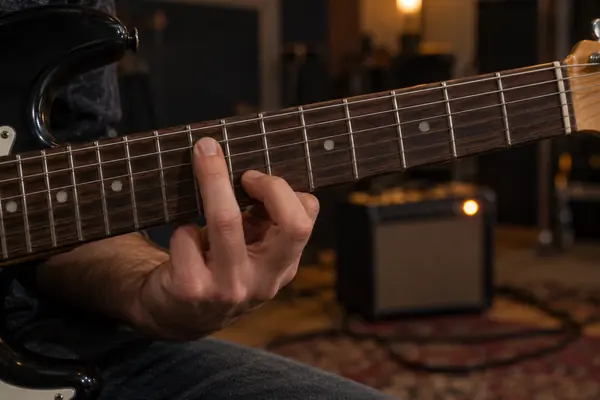
PICKUPS
A coil feels the string move
Most electric guitars use magnetic pickups. By Faraday's law of induction, a steel string moving near the magnet and coil creates a small voltage that follows the string's velocity.
How we know soundboardrockstar
THE PHYSICS OF ROCK GUITAR
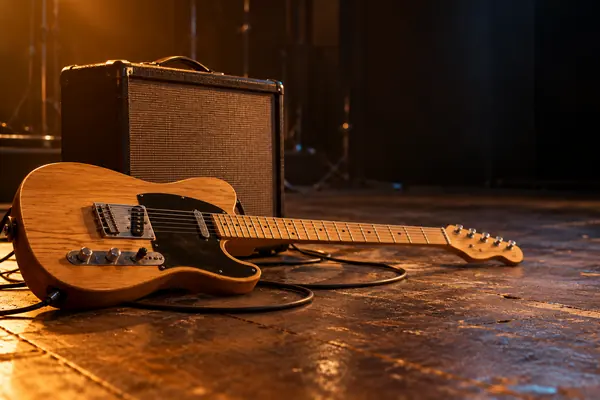
An electric guitar is made to be heard through an amplifier.
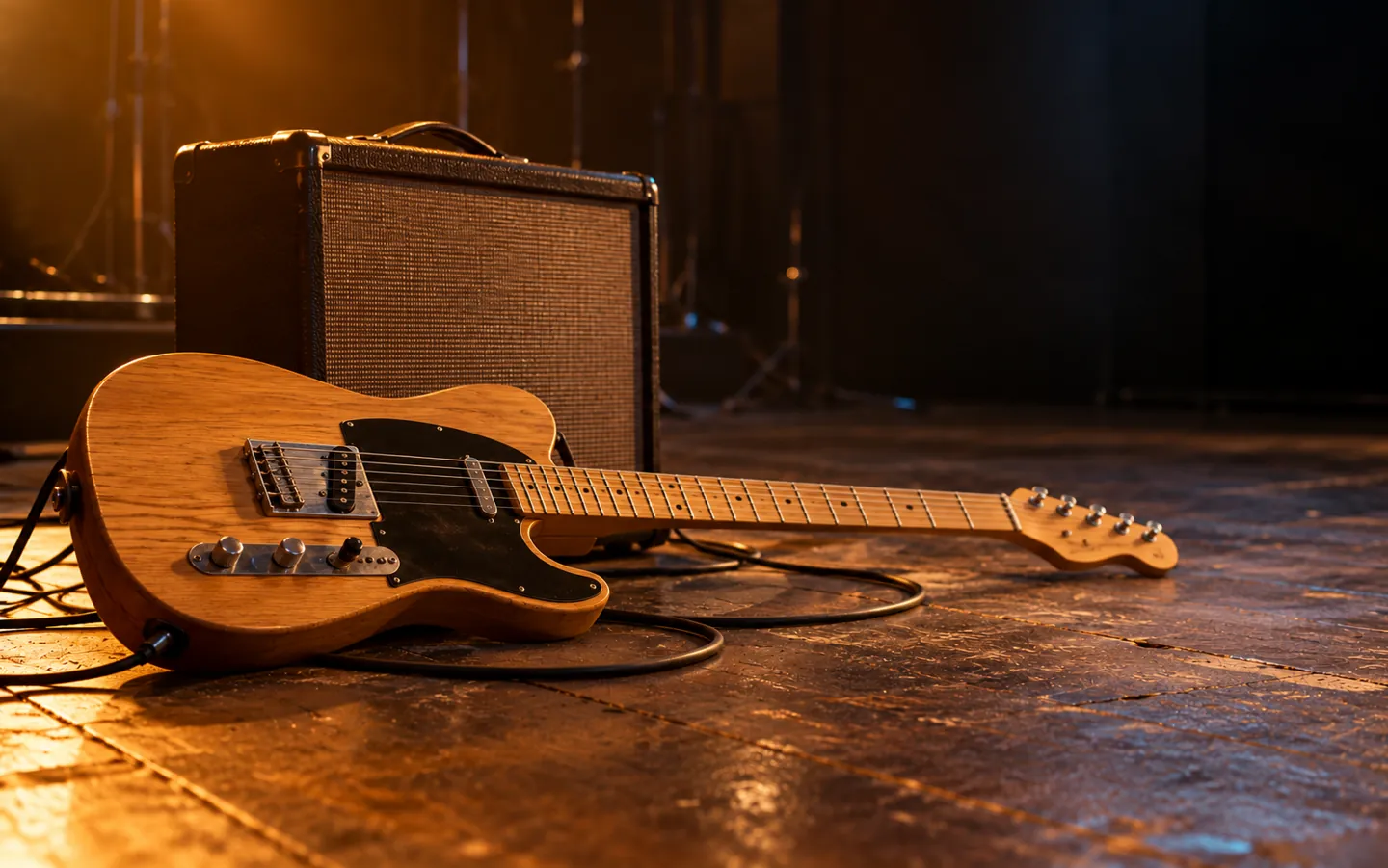
PLUG IN string, coil, amp
6,156 ratings Chord ratings collected
Its sound does not come from the body radiating into the room. Pickups turn the strings' movement into an electrical signal, and where they sit and how hard the amp is driven shape the tone you hear.
THE SHORT ANSWER
A pickup, its place on the body,
and an amplifier pushed past clean.
PICKUPS
Most electric guitars use magnetic pickups. By Faraday's law of induction, a steel string moving near the magnet and coil creates a small voltage that follows the string's velocity.
How we knowPOSITION
A pickup near the neck hears mostly the lower harmonics, for a mellow tone. One near the bridge hears more of the higher harmonics, for a brighter sound.
Try itDISTORTION
In a listening study of 171 people, distortion made every chord less pleasant, but power chords and major chords held up far better than minor and complex chords.
Compare chordsA CHORD CHECK
Pick a chord to see how listeners rated it, from 1 (unpleasant) to 10 (pleasant), when it was played with a heavily distorted guitar tone. The bar shows how well it held up.
Average ratings from 171 university students in Germany in 2016, published in Music Perception (2019). Personal taste varies: rock fans minded distortion less.
FOUR THINGS TO TRY
You need nothing but an electric guitar and an amplifier at a comfortable volume. Each test isolates one idea from the page.
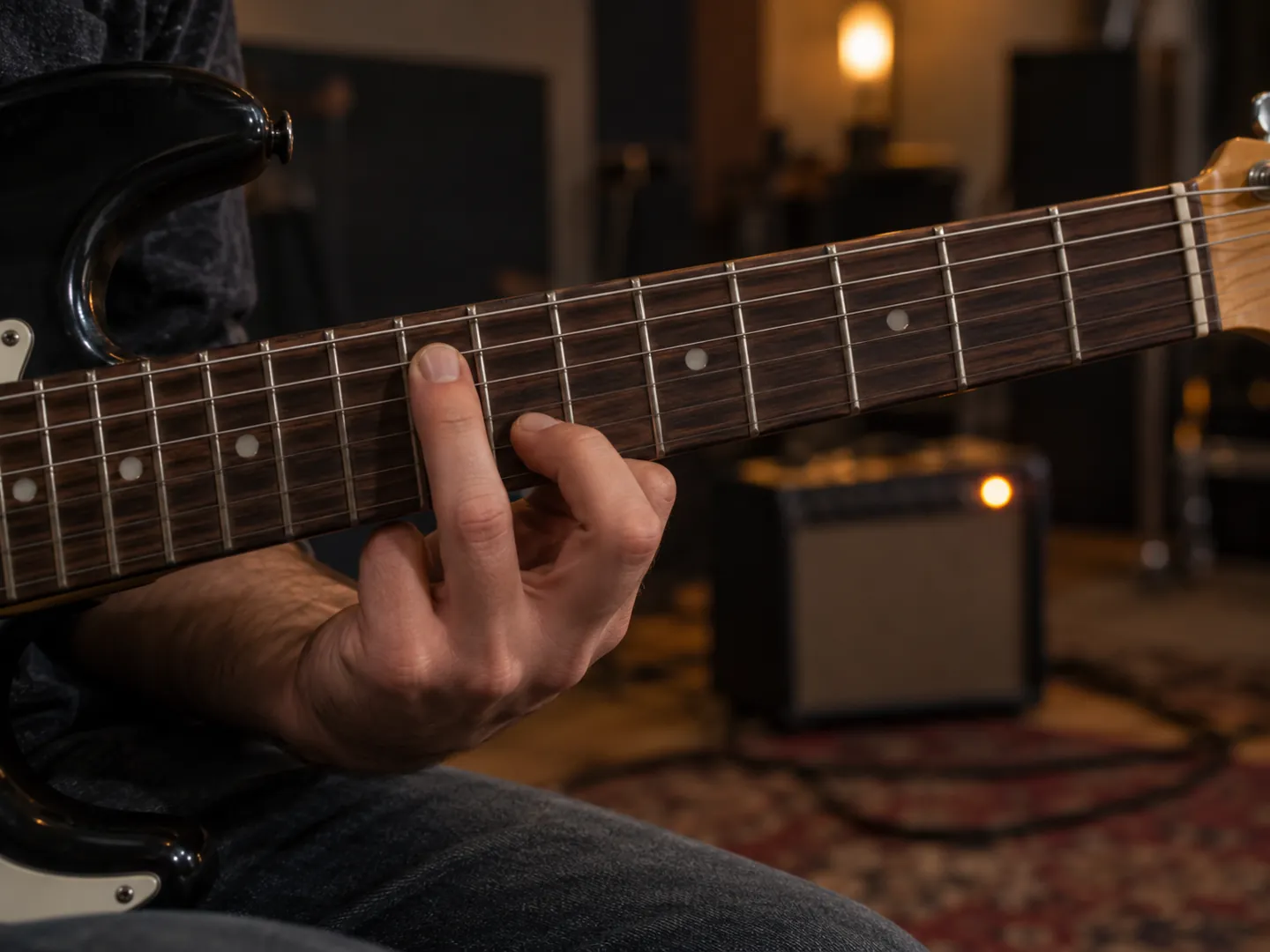
Play the same open string on each pickup in turn. The bridge pickup should sound thinner and brighter, the neck pickup rounder.
The string moves most where you pluck it, so picking directly above the selected pickup gives that pickup its strongest signal.
Play a minor chord clean, then with more gain. Then try a two-note power chord at the same settings and compare.
Strum a solid-body guitar unplugged. It is quiet, because the sound is meant to come from the signal, not the wood.
TWO NUMBERS WORTH KNOWING
One figure on the size of the study,
one on how far a chord can fall.
6,156 ratings
Chord ratings collected
171 students at six German universities each rated 36 short guitar chords, played clean, overdriven and distorted, on a 10-point scale.
LISTENING TEST · 2016
6.96 → 3.89
Average rating out of 10
The minor chord lost about three points as gain rose, while the power chord fell only from 7.40 to 6.06.
MINOR CHORD · CLEAN TO DISTORTED
Guitarists and rock fans rated overdriven and distorted chords as more pleasant than other listeners did. A 2018 study by the same researcher found that both more distortion and more complex chords reduce sensory consonance, most of all together.
WHERE IT STARTED
The first commercially successful electric guitar was a cast-aluminium lap-steel instrument nicknamed the 'frying pan' for its shape. The Metropolitan Museum of Art says it was made from 1932 to 1939 and was also the first solid-body guitar.
It grew out of the craze for Hawaiian slide music. As audiences grew, the small acoustic instrument was hard to hear on large stages, so a horseshoe-shaped magnetic pickup was fitted over the strings to send their vibration to an amplifier.

Questions
A magnetic pickup is a magnet wrapped in a coil of wire. When a steel string vibrates near it, Faraday's law of induction produces a small voltage that follows the string's velocity. That signal is amplified and sent to a loudspeaker.
Yes. Penn State acoustics research compares three kinds: magnetic pickups measure string velocity, optical pickups use a small infrared beam to track the string's position, and piezoelectric pickups in the bridge measure the force of the strings.
Physics notes from the University of Illinois explain that a pickup near the neck picks up mostly the lower harmonics, giving a mellow sound, while one near the bridge picks up more of the higher harmonics, giving a brighter sound.
A 2019 listening study found that with a distorted tone, power chords and major chords were rated as more pleasant than minor and altered dominant chords. That fits the habit, especially in heavier styles, of using simple chords with high gain.
No. In the same study, people who play electric guitar and listeners who like rock rated overdriven and distorted chords as more pleasant than other participants did. Clean chords were rated similarly by everyone.
Updated
ABOUT THIS NAME
soundboardrockstar.com is part of the DoodleSale portfolio. It isn't in an auction right now, but you can ask about leasing it.